Jun 5, 2026
Puffy shoulder pads, oversized chest ribbons, tight-fitting waistcoats coupled with athleisure pants and bell-shaped headwear that make one's head look like a mushroom cap. Not to mention midi dresses with frilly hems... Fashion's occasionally wild conjugation certainly leaves no one indifferent, whether they're detractors, neutral observers, or fervent aficionados. In a sense, OSHARE KOZOU WA HANAMARU is like haute couture: bold and visually energetic, yet vaguely perplexing and embarrassing at times. It's much like seeing a model's parade as she wears nothing but a skimpy, frilly pink robe composed of leather straps and nipple tassels. One might wonder if it was merely the couturier's creative
...
whim or if it genuinely targets a niche dress code interest. As you can see, this introduction is not entirely ancilliary. That's because the elephant in the room has to be addressed. Yes, I concede this anime raises an eyebrow and makes one twitch uncomfortably in their seat. That being said, I believe we can look at this quirky item beyond its uneasy moral implications. After all, if this review were simply a corollary of the others, it would fail to inform you just as much about what you're about to tread into, which is why it's important to consider it on its own.
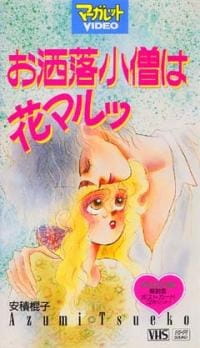
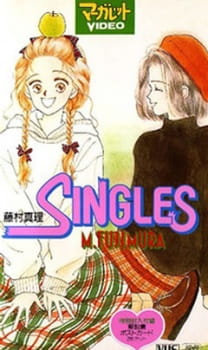
So, how did it come to be? Why does it exist? Who is responsible for this covert aggression against proper social conventions? To understand that, we must take a close look at Shueisha. Not the Weekly Shonen Jump you're used to seeing, but another magazine. The one interesting us was created in 1963, five years before this juggernaut of the manga edition. I am, of course, alluding to Margaret, a bimonthly shōjo magazine aimed at middle and high school girls, as well as young adult women. It was very popular, as it used to sell more than 100,000 copies. This motivated the creation of the Margaret Video Series, which included popular entries from that time, such as "A-Girl," "Singles," and "Oedo wa Nemurenai!"
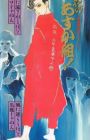
While shounen often feature characters eager to grow in strength and reputation, shōjo follow a similar path. The heroine of OSHARE KOZOU WA HANAMARU isn't terribly different. Fujiya Kotobuki, perhaps named in reference to the 80s fashionable musician Hikaru Kotobuki, does not want to train in martial arts and take down a mountain of muscles. Rather, she seeks social elevation as a fashionista. Of course, she has her sights set on her own Tuxedo Mask, Hodaka Kunishige, a fashion designer and the owner of the Galopine & Galopin clothing store. I'm not completely innocent in making this tongue in the cheek comparison, since Mitsuichi "Sailor Moon" Kotono voices her. It's at least a little less murky to have the 14-year-old pubescent girl being the pursuer rather than the pursued. Perhaps she once embodied the desire of girls born at the turn of the '70s to mature quickly and form bonds with dominant and yet nurturing adults. From a sociological perspective, this franchise hints at the trope of distant parents who are so removed from their children's lives that they become almost like the estranged supreme gods of the Gnostics. Indeed, despite their important role in the plot, Fujiya's relatives are never shown in any scene. If a mother does not participate in a girl's formative years or is considered an obstacle to fulfillment, it's not absurd to think that the audience will relate to the fantasy of precociously becoming both the lover and mother. It might have been a generational yearning if we take into account that Margaret's sales dramatically decreased starting in 2009. It's probably irrelevant, but I'll mention it anyway because it could be the reason behind Azumi Tsueko's success as an author. Ultimately, I leave it to you to judge.
Qualitatively, it is average among the Margaret Video Series and shōjo productions of the time. The main characters are consistently portrayed as stylish vessels with whom the young audience can identify: they are good-looking, single, bubbly, creative, shy, but not without any agency and assertiveness. The visuals are definitely one of the main attractions. Kazuhiro Soeda's character designs deftly interpret Azumi Tsueko's shōjo style, combining tender curves and strokes with wide-spanning silhouettes for males. As a point of reference, Soeda's personal touch is particularly noticeable in another OAV, "Haou Taikei Ryuu Knight: Adeu Legend"; in a project as OSHARE KOZOU WA HANAMARU, it definitely meshes well. It's odd to think about, but Madhouse is the main animation producer even though Shueisha is more typically associated with Toei Douga. Still, I can picture them being too busy with multimillion-yen battle shōnen prospects to work on less important side jobs as this one. This title makes more of an impression as fluff than flair, so it wouldn't be completely shocking if they refused to sign a contract for this reason. Sound-wise, the FM-synth soundtrack from Thousand sketchS is completely forgettable. I had to replay scenes to refresh my memory about it. It is as if this anime caters to the eyes, not wanting compositions to distract in an importunate way. Unsurprisingly, OSHARE KOZOU WA HANAMARU is their only contribution to the medium. However, all of these are secondary considerations because, as maidens are, they expect romance in their fiction. Mami Watanabe, the screenplay artist, makes the most of the limited screen time allotted to the OAV. She is not to blame for her supposed incompetence; she excelled as an episode writer on shows such as "The Irresponsible Captain Tylor" and "Record of the Lodoss War", after all. The resolution of the intrigue is not bad, it is just undone by the rushed pace. The mediating friend abruptly ends the ghosting situation between this age gap couple mostly because the short duration of the OAV compels it. Fujiya's lie about her age is a significant source of conflict, but it is disappointing that we are not shown how Hodaka concludes that a teenager rather than a Lolita-type college student is frequenting his store. In hindsight, it also makes that character unsavory for not rejecting an underage girl unfitting for labor. Furthermore, the insular nature of that character hinders us from getting his much needed introspective thoughts. While I can imagine he is regarded as a model of desirable masculinity by Margaret's readers, in this production, he is not very conducive to a satisfying emotional climax. Kazuomi Kujou, the friend in question, would have been a better fit because he has an open soul. Similarly, aside from her fashion-lover persona, we are shown very little about Fujiya's life. Besides characterization, the fashion setting accomplishes little besides acting as a backdrop to the romance. I am not at all familiar with the source, like 99.9% of the western spectators, yet I notice no striking indication that fashion-design is the central thematic interest of Azumi Tsueko as a mangaka. It is a shame because it is certainly more interesting subject to explore than the personal fantasy of a young teen getting in couple with an adult designer. I, for one, would certainly be interested in an art book featuring Tsueko's costume designs. It would serve as a valuable time capsule of Japanese clothing trends from the '90s. In this regard, art director Tatsuya Kushida only provides a shallow preview of what could be.
This brings us to our final question. Is this remotely recommendable? To that, I reply, "Not really." Unless, of course, you're familiar with the biweekly magazine it came from, or you really want to imagine a conversation between Sailor Moon and Ferdinand from "Ascendance of a Bookworm". Admittedly, these are oddly specific motivations.
That concludes the review by your host, Ziusudra, who has run out of things to discuss. Stay tuned for more comprehensive takes at obscure subculture pieces!
..| Colophon |..
The purpose of the Colophon is to provide practical information to the audience about objectionable content.
.. Violence: Unless you consider cutting fabric or french kissing uncomfortably underage girl to be violent, you can rest assured that no violence is being done to anything or anyone.
.. Graphic Nature: The morally gray nature of the relationship depicted in this anime is probably your main concern. Not to mention, Kazuomi's playful slap on Fujiya's butt is a catastrophic visual joke. That being said, there is no graphic content that would prompt anyone to label it as ecchi, let alone a hentai. It is just about as uncomfortable as hearing your old uncle catcalling a schoolgirl. Really.
Reviewer’s Rating: 5
What did you think of this review?
Nice
 0
0
Love it
 0
0
Funny
 0
0
Confusing
 0
0
Well-written
 0
0
Creative
 0
0Show all